
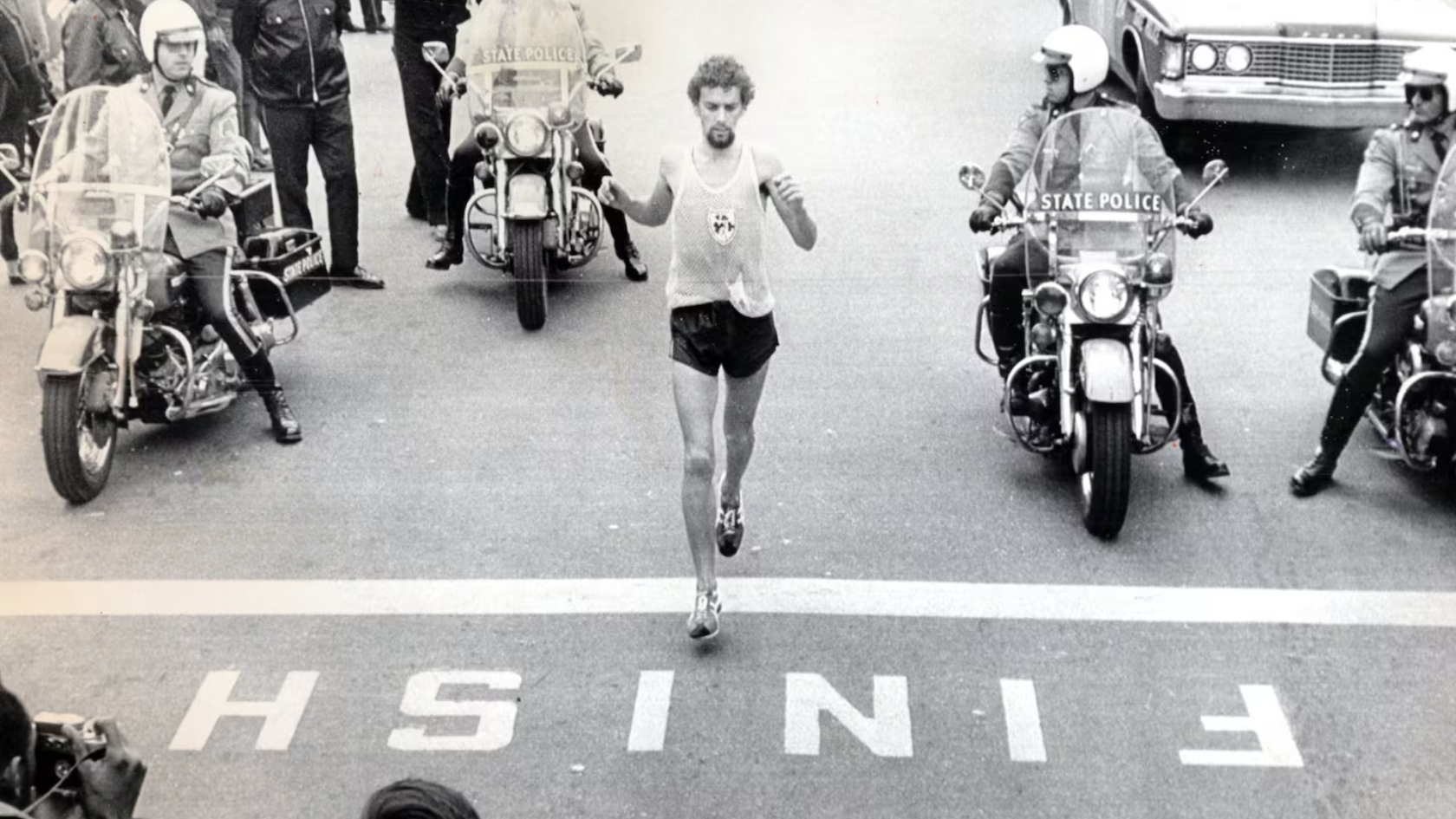
On the 15th of April 1974, just over 52 years ago to the day, 22 year old Neil Cusack made history as the first and still the only Irish athlete to win the Boston Marathon. Clocking a time of 2:13:39, his performance was the second fastest winning time in the race’s history to that point. Coming from Limerick as a student at East Tennessee State University (ETSU), Cusack emerged from a record field of over 1,900 runners to cement his legacy in distance running.
The Boston Marathon Was Changing
The early 1970s marked Boston’s transition from an amateur institution to a modern international benchmark. Between 1970 and 1974, the race introduced tighter qualifying standards and official recognition for women. The arrival of what the Boston Athletic Association (BAA) called the “collegiate speedboys” signaled a shift toward professional grade performance.
While Irish runners like Patrick McMahon had previously come close (finishing second in 1971), Cusack was the one to turn potential into a historic win. Despite a 1971 BAA standard of 3:10, Cusack’s entry was never in doubt; he had already run a 2:16:18 at the Peach Bowl Marathon in Atlanta.
An Underdog Story
Cusack’s path to the starting line in Hopkinton was unconventional. He attended ETSU on a partial scholarship, washing dishes in his first year to make ends meet. He quickly became a standout, winning the 1972 NCAA Division I Cross Country Championship.
Remarkably, Boston 1974 was only the second marathon of Cusack’s life. His approach was informal: ETSU paid his way, and on the eve of the race, he sewed a shamrock crest onto his vest. While the favorite, Tom Fleming, was vocal about his intentions to win, Cusack remained quietly confident. He famously noted that he planned to "sit back for six miles and listen to the birds singing" before making his move.
Dominating the Course
The weather on race day was mild, sparing runners the extreme conditions Boston is known for. Cusack followed his plan perfectly, staying 100 yards off the lead for the first six miles before taking command by the time he reached Natick.
By the halfway point in Wellesley, Cusack had built a one minute lead over Fleming. His strength on the hills, honed by daily training in Tennessee, proved decisive. As he crested Heartbreak Hill, he was on a blistering 2:09 pace and reportedly felt "no strain." While Fleming attempted to close the gap, Cusack maintained "clockwork steadiness," finishing at the Prudential Center amidst a roar from the Boston crowd.
The win was an immediate sensation, particularly among the city’s Irish population. Without a modern prize purse, Cusack’s rewards were a medal, a laurel wreath, and envelopes of cash of ten and twenty dollar notes sent by fans so he could "have a beer on them."
A Landmark for Irish Athletics
Cusack’s victory was a massive statistical achievement for Ireland. His 2:13:39 shattered the existing Irish record of 2:15:03 by 84 seconds. This record stood until 1976. Along with his 10,000m national record of 28:45.8 set at the 1972 Olympics, the Boston win established him as the premier Irish distance runner of his generation.
The "drought" of Irish winners since 1974 is often attributed to the rapidly increasing depth of the international field. By the late 1980s, Boston had become a primary Olympic trial for world class African runners. While Irishmen like John Treacy and Andy Ronan would later earn third place finishes, the unique combination of factors that fueled Cusack's victory has not been replicated by an Irishman since.
Neil's Lasting Legacy
Cusack’s career extended far beyond that one afternoon in Massachusetts. He competed in two Olympic Games (1972 and 1976), represented Ireland in 13 World Cross Country Championships, and won the 1981 Dublin Marathon in 2:13:58.
In 2024, on the 50th anniversary of his victory, Cusack returned to Boston as the official race starter and received the Special Recognition Award from Athletics Ireland. Despite his many accolades, Cusack admits that Boston is the race people mention first. It remains a quintessential story of a young runner with a hand sewn shamrock who took on a world class field and won on his own terms.